
Chimney Flashing Repair in the USA
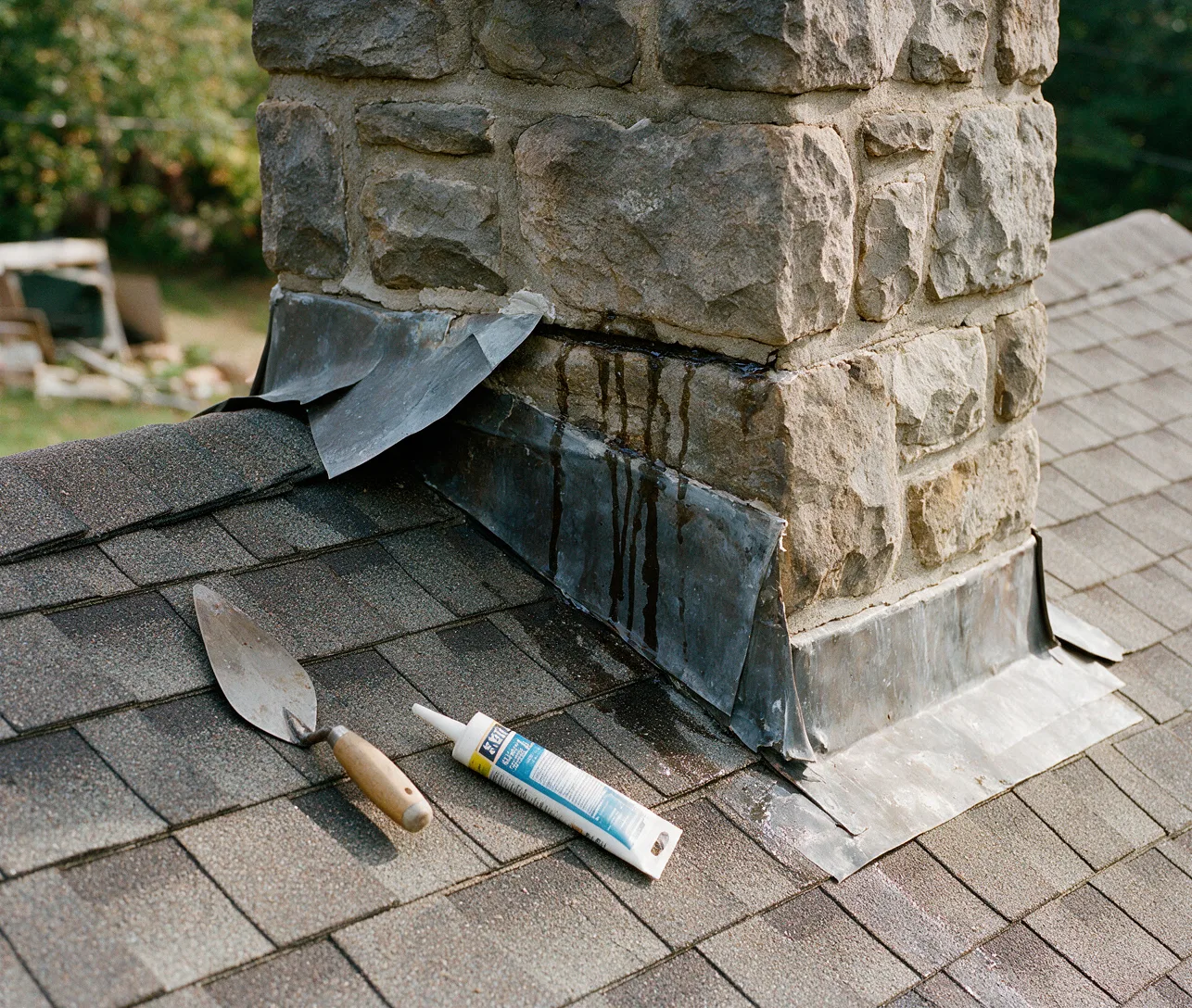
Chimney flashing sits where the chimney meets the roof slope and directs water around the masonry or metal stack. When trees drop leaves that trap moisture or when wind drives rain under the edges, the metal can corrode or the sealant can pull away from the bricks. Hometown Smoky Roofing Repair sends crews who replace step flashing, counter flashing, and cricket pieces so water flows into the gutters instead of behind the siding or into the attic insulation.
Homeowners often notice dark streaks on the ceiling or a damp smell near the fireplace after storms. Our technicians measure the existing flashing width, check the slope angle, and note how many courses of shingles tie into the chimney before deciding whether to reuse any metal or start fresh with new pieces that match the roof pitch and color. The Hometown Smoky Roofing Repair homepage covers what to inspect first when facing chimney flashing repair anywhere in the USA.
Warning Signs Around the Chimney
- Dark water rings show up on ceiling drywall directly below the chimney stack after rain.
- Moss or algae grows along the base of the chimney where constant moisture collects.
- Rust flakes appear on the metal strips that run up the sides of the brickwork.
- Shingles curl or lift right next to the chimney because water gets trapped underneath.
- White mineral stains run down the brick face where water has been seeping for months.
Common Causes of Flashing Failure
Leaves and pine needles collect against the chimney and hold moisture against the metal for weeks. This constant dampness breaks down the sealant and starts rust on galvanized or painted flashing. Over time the metal expands and contracts with temperature changes until small gaps open and let water run under the roof deck.
Wind-driven rain can push water up under the counter flashing if the original installer left too wide a gap or used short nails that pulled out. On steep slopes the water gains speed and finds every seam. Hometown Smoky Roofing Repair crews look for these patterns before choosing the right height and overlap for new pieces.
Older chimneys sometimes have mortar joints that crumble and let the flashing pull loose. When that happens the whole assembly needs to be reset with fresh step flashing tucked under each course of shingles.
What Technicians Inspect and Measure
Our technicians start at the roof edge and work up to the chimney. They check the condition of every step flashing piece, measure how far the counter flashing extends into the mortar joints, and note the width of the cricket if one exists. They also look for nail pops and loose shingles that show where water has already moved.
A small level and tape measure help confirm the pitch so new flashing will sit tight against both the roof and the chimney. They photograph the sealant beads and any rust spots so the homeowner can see exactly what needs attention before work begins.
Inside the attic they check for wet insulation or darkened rafters directly behind the chimney. These signs tell them how far the leak has traveled and whether the decking itself needs attention during the repair.
Repair and Replacement Options
When the original flashing is only lightly rusted but still flat, crews can clean the surface, apply new butyl sealant, and add a bead of roof cement along the top edge. This approach works well on roofs that still have many years of life left and keeps the disruption small.
For more damaged flashing, technicians remove the old metal, install new step flashing that matches the shingle color, and tuck a fresh counter flashing into the mortar joints. They use lead wedges or stainless screws so the metal stays tight through freeze and thaw cycles.
On chimneys with no cricket, adding a small saddle diverts water that would otherwise pool behind the stack. The new metal is soldered or sealed at every seam and then coated to match the roof so it blends in from the street.
Materials and First Steps for Homeowners
Hometown Smoky Roofing Repair uses 26-gauge galvanized or painted steel flashing along with high-grade polyurethane sealant rated for roof temperatures. Step flashing pieces are cut to fit the shingle exposure so each one overlaps the next by at least two inches. Cricket metal is formed on site to match the exact roof angle.
Before the crew arrives, homeowners can safely walk around the house and note any ceiling stains or musty odors near fireplaces. They should also clear loose debris from gutters so water can drain freely once the flashing is fixed. Moving attic items away from the chimney area makes the inspection easier.
Taking photos of the stains and the roof from the ground helps the technicians understand the leak path before they climb. This preparation keeps the visit focused on the chimney area and the surrounding shingles.
Chimney Flashing Repair questions
How long does chimney flashing repair usually take?
Most jobs finish in one day because the crew removes the old metal, installs new step and counter flashing, and reseals everything before leaving. Larger chimneys or those needing a new cricket may take an extra morning if the roof deck needs minor patching at the same time.
Can flashing be repaired without replacing shingles?
Yes, when the shingles around the chimney are still sound the technicians lift only the courses that cover the step flashing. They slide new metal in place and set the shingles back down without cutting or replacing them. This keeps the repair limited to the chimney area.
What type of metal works best for chimney flashing?
Galvanized steel with a painted finish matches most asphalt roofs and resists rust for decades. Copper can be used if the homeowner wants a different look, but it requires different sealant and costs more. Technicians choose the metal thickness and finish based on the roof slope and local weather exposure.
Should homeowners try to seal flashing themselves?
Homeowners can clear leaves from the base of the chimney and check gutters, but applying sealant from a ladder often leaves gaps that trap more water. Proper repair requires lifting shingles and installing new metal tucked into the mortar, which needs roof access and the right tools.
Request Chimney Flashing Repair
Hometown Smoky Roofing Repair crews can inspect the flashing around your chimney and explain the best repair steps for your roof.