
Hail Damage Repair in the USA
Hail strikes create dents in metal panels and dislodge granules from asphalt shingles especially on steeper pitches where impacts concentrate force. Our technicians at Hometown Smoky Roofing Repair examine each affected area to determine if underlayment has torn or seams have separated allowing water entry during later rains.
Homeowners notice problems after storms when small craters appear or dark spots show missing surface material. We assess slope angle and tree cover that may have shielded some sections while leaving others exposed to direct hits that crack flashing around vents and valleys. For hail damage repair concerns the Hometown Smoky Roofing Repair homepage offers step by step checks usable anywhere USA.
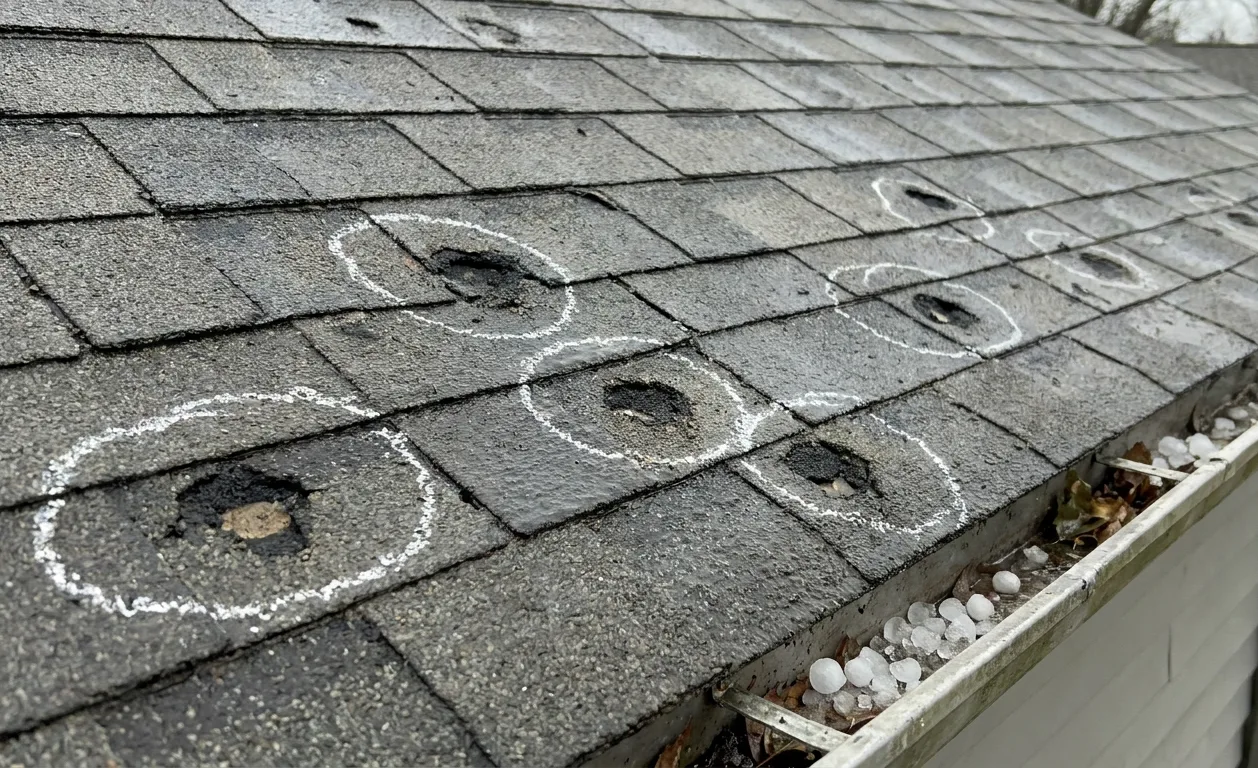
Visible Indicators After Hail Events
- Crushed granules leaving dark patches on shingle surfaces after repeated impacts.
- Round dents on metal roofing that hold water and promote rust over time.
- Cracked or displaced ridge caps where hail has hit the highest points directly.
- Soft spots underfoot on decks indicating broken felt or insulation layers beneath.
- New leaks near skylights following storms that previously showed no moisture issues.
How Hail Strikes Damage Roof Components
Hail of varying sizes hits at different velocities depending on storm strength and roof pitch. Larger stones fracture fiberglass mats in shingles while smaller ones erode protective coatings on metal. Our technicians measure dent diameters and depths because anything over a quarter inch often requires panel replacement rather than simple sealing to prevent long term corrosion from trapped moisture.
Flashing around chimneys and vents bends or punctures when hail glances off at angles. Valleys collect debris after impacts which then holds water against seams. We inspect these linear areas first because they channel runoff and any break there spreads quickly across multiple courses of roofing.
Inspection Steps Technicians Follow
We start from the ground with binoculars to mark clusters of damage before climbing. On the roof we use a straight edge and depth gauge to record how far each dent penetrates the substrate. This data shows whether the impact reached the decking or stopped at the surface layers.
Technicians also check for displaced fasteners and lifted edges that create entry points for wind driven rain. Underlayment is probed in several locations around each dent to confirm it remains intact. Slope direction matters because hail often strikes harder on the windward side where exposure is greatest.
We document granule loss by comparing affected sections to protected eaves or areas under overhanging branches that received less direct strikes.
Materials Selected for Hail Repairs
Replacement shingles match the existing weight and color so the repair blends without drawing attention. For metal roofs we use matching gauge panels and butyl tape at seams to maintain flexibility during temperature swings. Underlayment patches receive self adhering membrane that extends beyond the damaged zone by several inches on all sides.
Sealant applied at flashing joints is chosen for ultraviolet resistance because hail damaged areas often receive extra sun exposure after surrounding material is removed. Ridge vent sections are replaced whole when dents have deformed the baffles that control airflow and keep insects out.
What Homeowners Can Check Before We Arrive
Walk the property perimeter and note any dents visible from below especially near roof peaks and valleys. Photograph clusters of damage with a coin or ruler for scale so we can prepare the right materials. Avoid climbing steep sections yourself if the surface feels slippery from recent rain or loose granules.
Clear gutters of any fallen debris that might hide additional impact marks along the eaves. Mark interior ceiling spots with tape where water stains appear after the storm because those locations often align with roof damage we will inspect first.
Hail Damage Repair questions
What size hail typically causes roof damage?
Stones larger than one inch often dent metal and crack shingles on impact. Our technicians measure actual dent size on site because wind speed and roof angle change the force delivered even from smaller hail that falls at an angle.
How do you decide between repair and full replacement?
We count the number of damaged squares and check whether underlayment remains sound. When impacts exceed twenty percent of the surface or multiple seams have separated replacement of the affected sections prevents repeated leaks during future storms.
Can hail damage be hidden under existing layers?
Yes broken felt or cracked decking can sit beneath intact shingles. Technicians lift sample courses around dent clusters to verify the substrate condition before deciding on surface only fixes or deeper material removal.
What should be done right after a hail storm?
Note any new interior moisture marks and photograph exterior dents from safe ground level. Avoid walking the roof until our technicians arrive because loose granules create slip hazards and further movement can widen existing fractures in the roofing.
Hail Damage Repair Assessment
Contact Hometown Smoky Roofing Repair to have technicians inspect hail impacts and recommend targeted fixes for your roof.