
Emergency Roof Tarping in the USA
Hail stones can crater metal panels and dislodge granules from asphalt shingles, letting water reach the decking fast. When that happens our technicians first walk the perimeter to spot where water is entering and mark those zones with chalk before any covering starts. They check fascia boards for solid nailing points because loose wood will pull out in the next wind.
Fallen limbs from trees growing over damp shaded slopes often punch through valleys or tear underlayment. Our crews measure the opening, cut plywood patches if needed to bridge the hole, then lay a heavy reinforced tarp over the entire affected course so water sheets off instead of pooling against the next row of shingles. The homepage from Hometown Smoky Roofing Repair walks through common causes of emergency roof tarping found on roofs in the USA.
Warning Signs a Tarp Is Needed
- Granules washing into gutters after a storm
- Dark water rings on ceilings below roof valleys
- Shingles lifted or curled at the edges
- Daylight visible through attic sheathing
- Moss mats sliding down steep shaded slopes
How Damage Starts on Shaded Roofs
Trees drop limbs and trap moisture against the north facing slope where moss grows thick. That constant damp softens the felt underlayment so a single hail stone can drive straight through to the plywood. Once the decking gets wet it swells and pushes nails upward, creating new entry points for the next rain.
Wind driven rain finds every raised shingle edge on a steep pitch. The water travels sideways under the overlap until it reaches a valley or vent pipe flashing that was never fully seated. Our technicians trace the flow path from the ridge down so the tarp covers the full travel distance instead of just the obvious hole.
What Technicians Measure Before Covering
Crew members first check the fascia and barge rafters for solid wood because those are the anchor points that hold the tarp against gusts. They measure the run from ridge to eave and add three feet of overlap on every side. They also note any skylights or turbine vents inside the area so the tarp can be cut and flashed around them without creating new leaks.
On metal roofs they count the panel ribs to decide whether to use furring strips under the tarp for drainage channels. They look for existing rust streaks that show where screws have backed out, because those spots need extra butyl tape before the tarp goes down.
Materials and Attachment Methods
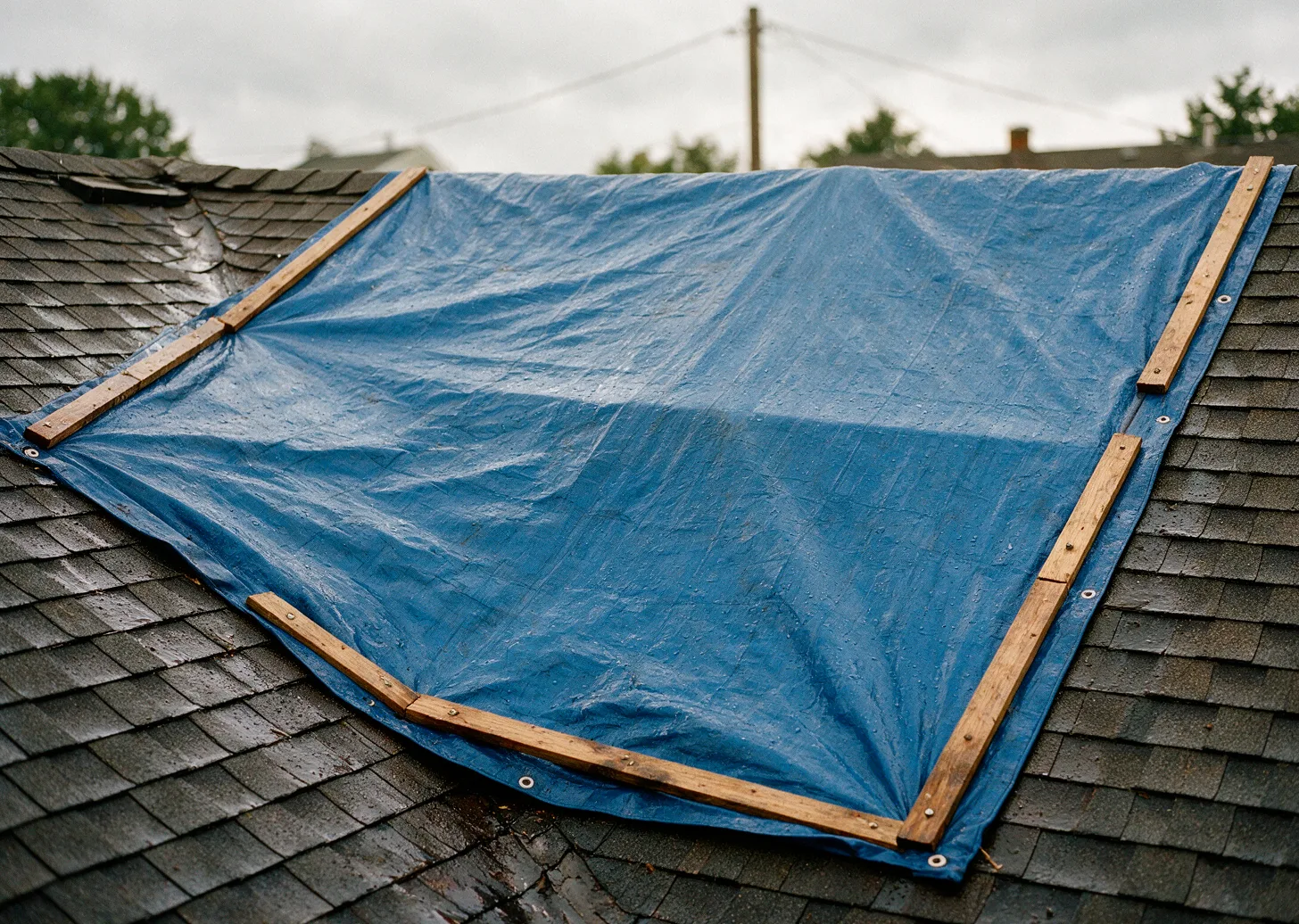
We use 10 mil woven polyethylene tarps with reinforced corners because lighter films shred on tree branches. Attachment starts with 2x4 battens screwed through the tarp into the fascia on eight inch centers. Where the slope is too steep for safe footing, the crew rigs ropes from the opposite side of the ridge to pull the tarp tight without standing on wet shingles.
Bungee cords and ratchet straps hold the edges along the eaves while furring strips create a slight crown so water runs toward the gutters instead of ponding. Every seam between tarps receives a bead of compatible sealant so wind cannot drive rain under the overlap.
First Steps Homeowners Can Take
Stay off the roof, especially on steep pitches or when moss makes the surface slick. From the ground, clear loose branches that rest against the eaves so they do not keep tearing the underlayment. Place buckets under active interior drips and move furniture away from those spots until the tarp stops the flow.
Note the color and location of any granules in the downspouts because that tells our technicians which slope took the hit. Keep pets and children away from ladders or fallen debris until the area is secured.
Emergency Roof Tarping questions
How long can a tarp stay in place?
Tarps last through several weather cycles when properly battened and overlapped. They are meant to bridge the time until a permanent repair crew can schedule the work, not to serve as a long term roof surface.
Will tarping stop all interior leaks?
A correctly installed tarp diverts water away from the damaged section. Any water already inside the attic or walls will still need time to dry, so keep monitoring ceilings for new stains after the tarp is up.
Can I tarp a small area myself?
Homeowners should avoid climbing steep or moss covered slopes. Small ground level leaks on low pitch sections can sometimes be covered with plastic sheeting from a ladder, but any work above single story height is best left to technicians who have the right safety gear.
What happens after the tarp is installed?
Our technicians return to inspect the tarp after the next rain and tighten any loosened straps. They also document the underlying damage with photos so the permanent repair plan can be prepared without removing the temporary cover until the crew is ready.
Schedule Emergency Roof Tarping
Contact Hometown Smoky Roofing Repair when storm damage needs quick coverage on any roof across the USA.