
Fascia and Soffit Repair in the USA
Fascia boards cap the outer edge of roof rafters while soffits cover the underside to allow airflow into the attic. Our technicians see these areas fail first when gutters overflow or when leaves trap moisture against wood near trees. Once rot starts it spreads along the grain and weakens the connection points that hold gutters in place.
We measure the full length of each run and check how far damage extends into the rafter tails before deciding on section replacement or full runs. Aluminum and vinyl options resist moisture better than wood in shaded spots where moss grows. Proper overlap at joints keeps water from entering the attic space again. See what Hometown Smoky Roofing Repair recommends for fascia and soffit repair by reading the full information on the homepage in USA areas.
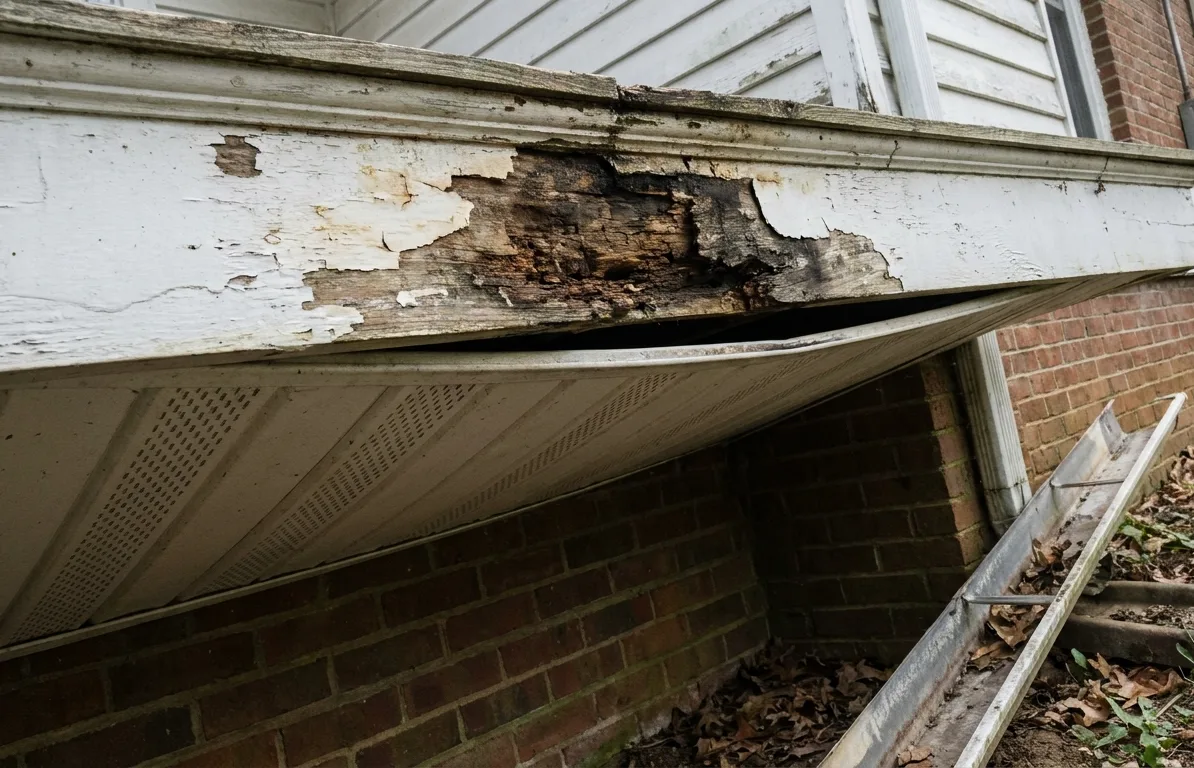
Visible Changes Along Roof Edges
- Paint peels or blisters along the bottom edge of fascia boards.
- Soffit panels sag or show dark water stains near vent slots.
- Gaps appear where fascia meets the roof deck after storms.
- Wood crumbles when pressed near gutter attachment points.
- Air leaks or daylight show through soffit seams from inside the attic.
Common Causes of Edge Damage
Overflow from clogged gutters sends water behind the fascia and soaks the cut ends of rafters. In areas with heavy tree cover this happens faster because pine needles and oak leaves hold moisture against the wood for weeks. Over time the constant dampness invites carpenter ants that tunnel further into the rafters.
Ice dams in colder months push water under shingles and down the fascia face. The same water finds soffit vents and soaks the insulation above the ceiling. Our technicians trace the path by lifting a few shingles at the drip edge and checking the back side of the fascia for dark staining.
Poor original nailing lets fascia pull away during high winds and creates openings that rain drives into the soffit cavity. Once the cavity stays wet, mold grows on the back of the soffit panels and reduces attic airflow.
What Our Technicians Measure and Inspect
We start at one corner and record the exact width and thickness of existing fascia so replacement pieces match the roof slope. A moisture meter checks how far rot has traveled into each rafter tail before we cut back to solid wood. Soffit vent openings are counted and measured to confirm total airflow meets the attic size.
Attachment points are tested by gently tugging on gutter brackets to see if the fascia has pulled away from the rafters. We also look for missing or corroded drip edge that should have protected the top of the fascia. Any loose soffit panels are noted so new pieces can be secured without blocking the vent slots.
The angle where soffit meets fascia is checked for proper caulk or flashing that prevents water from entering the joint. In homes with steep roofs we note how far the soffit extends past the wall so new material aligns with the existing overhang.
Repair and Replacement Choices
When only a short section shows rot we cut out the damaged fascia and sister new lumber to the rafter tails before installing a matching board. Full runs get replaced when multiple joints have failed or when the homeowner wants to switch from wood to aluminum for less future maintenance. Soffit panels are swapped one bay at a time so attic ventilation stays open during the work.
Vinyl soffit is installed with hidden fasteners that keep the surface smooth and allow small amounts of movement. Aluminum fascia comes pre-finished in colors that match common gutter shades and bends around corners without extra seams. Wood replacement is reserved for homes where the original profile must be preserved for appearance.
New drip edge is always added over the fascia top before shingles are reset. This single piece keeps water from running behind the board and reaching the rafter ends again. Technicians also install new gutter brackets through the fascia into solid rafter tails so the system can handle full water flow without pulling loose.
Steps Homeowners Can Take First
Stand on the ground with binoculars and look for any boards that no longer line up with the roof edge or that show dark streaks below the gutter. Note which sections of soffit appear darker than the rest or have visible gaps between panels. These notes help our technicians focus on the right areas when they arrive.
Clear leaves and debris from the gutters so water flows freely to the downspouts. Avoid spraying water directly at the soffit vents because that forces moisture into the attic. If any panel feels loose when touched from a ladder, leave it alone and mark the spot instead of attempting to push it back into place.
Fascia and Soffit Repair questions
How do you know whether to repair or replace fascia boards?
Our technicians press a screwdriver into several spots along each board. If the wood gives way more than a quarter inch in multiple locations the entire run is replaced so the new fascia sits flat and supports the gutters without future sagging.
Can soffit vents be blocked during repair work?
We remove and replace soffit panels one section at a time and keep at least half the vents open on each side of the house. This maintains attic airflow while the work is completed and prevents moisture from building up above the ceiling.
What material works best when trees overhang the roof?
Aluminum fascia and vinyl soffit resist the constant moisture that falls from leaves and needles. These materials do not absorb water the way wood does and they keep their shape even when gutters overflow during heavy rain.
Do you check rafter tails before installing new fascia?
Yes, every rafter tail is probed for softness. Any tail that shows rot is cut back to solid wood and sistered with new lumber so the fascia has a firm nailing surface and the roof edge stays straight.
Schedule Fascia and Soffit Repair
Tell Hometown Smoky Roofing Repair which edges show damage so our technicians can inspect the full run.