
Roof Valley Repair in the USA
Roof valleys collect water from two slopes and direct it downward. When trees overhang the roof, leaves and needles trap moisture against the flashing, speeding up rust or sealant failure. Our technicians see this often on steeper pitches where runoff moves fast but debris lingers in the channel.
Hometown Smoky Roofing Repair replaces damaged valley flashing and installs new step flashing that tucks under shingles on each side. We match the existing metal gauge so the repair blends with the rest of the roof and handles the same volume of water. Hometown Smoky Roofing Repair places useful roof valley repair advice directly on the homepage for readers across the entire USA.
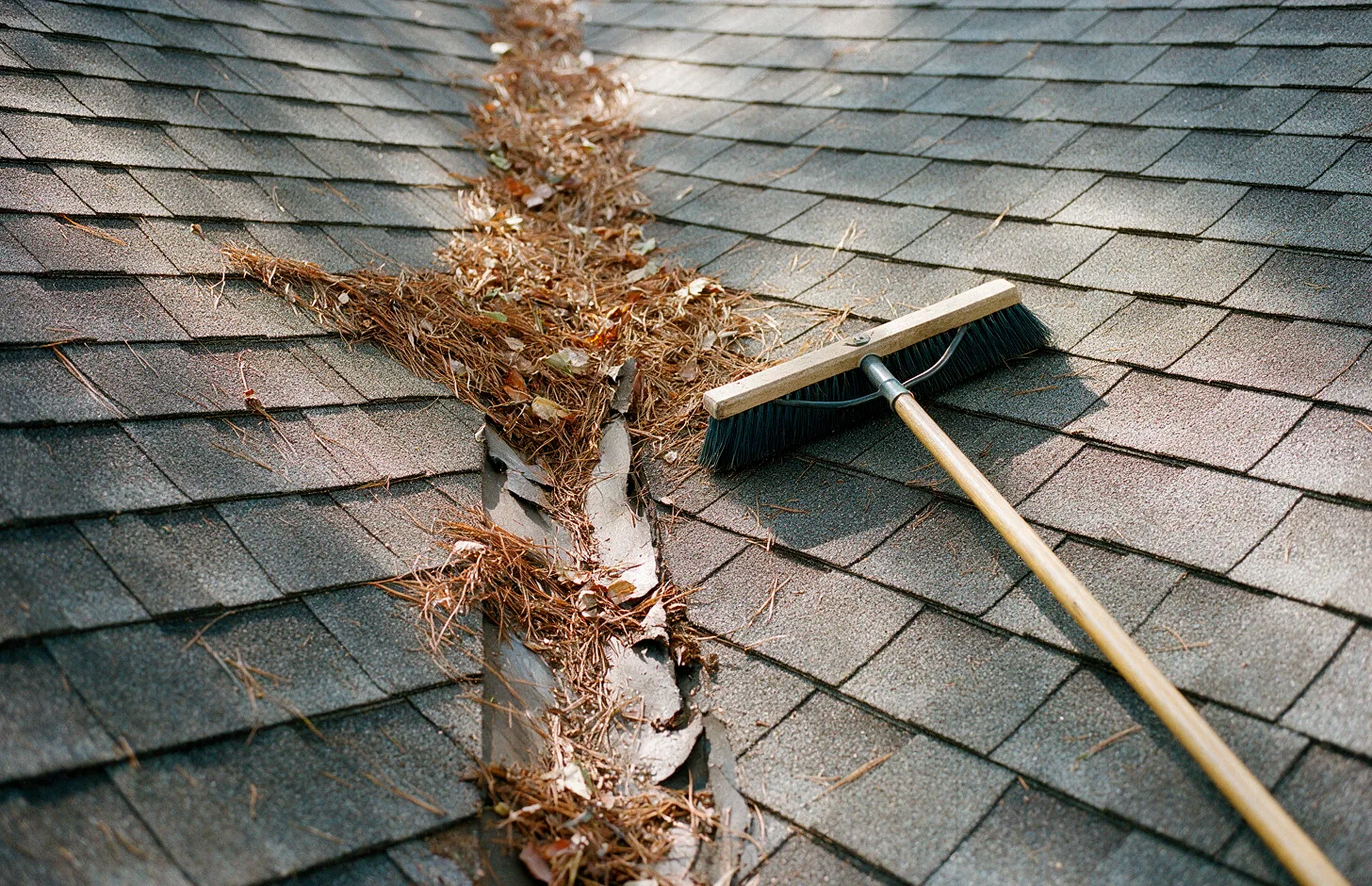
Visible Clues Around Roof Valleys
- Dark streaks running down shingles beside the valley line
- Soft spots in the ceiling directly below where two roofs join
- Shingles lifting or curling at the edges of the valley
- Rust stains or white powder on metal flashing visible from the ground
- Moss growing thick along the valley bottom after wet spells
Why Valleys Start to Leak
Leaves from nearby trees settle into the V-shaped channel and hold water against the metal. Over time this constant dampness breaks down sealant at the seams and allows rust to form on steel flashing. Steep slopes make the problem worse because fast water carries grit that scratches the protective coating.
Moss and algae take hold in the shade of branches and push roots under the flashing edges. Once that barrier is compromised, meltwater or rain finds the underlayment and works its way to the decking. Homeowners notice the first drips inside only after the damage has already spread several feet.
Checks Our Technicians Perform on Site
We climb onto the roof and clear loose debris by hand so the full length of the valley can be seen. Flashings are probed for loose nails and lifted corners. We measure the overlap of the metal into the shingles and check that the valley width meets the slope requirements for proper flow.
Technicians also inspect the step flashing on both sides for proper nailing and sealant condition. Any soft decking felt underfoot is noted so the repair plan accounts for possible plywood replacement. Photos are taken from the attic side to confirm where water has already stained the rafters.
Materials and Replacement Choices
Copper or painted aluminum flashing is selected based on the existing roof color and the home's exposure to wind-driven rain. Copper lasts longer in wet shade but costs more upfront. Aluminum is lighter and easier to form around irregular valley angles while still resisting corrosion when coated properly.
New step flashing is cut to length on site and interleaved with each course of shingles. We use ice-and-water shield under the metal on lower slopes and high-temperature underlayment on steeper sections. All seams receive a bead of compatible sealant that stays flexible in temperature swings.
What to Do Before Technicians Arrive
Homeowners can safely remove loose leaves from the valley using a soft-bristle broom while standing on a ladder at the eave. Avoid pressure washing, which can force water under shingles. Note any interior ceiling spots with a marker so the crew can match them to the valley location during inspection.
Keep gutters clear at the valley outlet so water does not back up during the wait. Do not climb onto steep sections or attempt to lift shingles yourself. These steps help our technicians focus on the repair instead of clearing obvious surface debris first.
Roof Valley Repair questions
Can a valley be repaired without replacing the whole roof?
Yes. When only the flashing and a few feet of surrounding shingles are damaged, we remove just those pieces, install new metal, and weave in matching shingles. The rest of the roof stays untouched.
How often should valleys be checked?
After every major storm and at least once each fall after leaves drop, look for debris piles or rust lines. Early cleaning prevents most leaks that would otherwise require a full valley replacement later.
What metal works best under heavy tree cover?
Copper resists the constant moisture from shade and moss better than steel. Aluminum with a quality coating is the next choice when budget or weight matters. Both need proper step flashing and sealant to last.
Will the repair change how the roof looks from the street?
New flashing is tucked under existing shingles so only a thin line of metal shows. We choose the closest color match available and keep the valley width the same so the repair blends with the original roof plane.
Schedule Roof Valley Repair
Contact Hometown Smoky Roofing Repair to inspect your roof valleys and stop leaks before they reach the attic.